
Huang Tsuo’s Descent into Complicity
The Killing RoomHuang Tsuo’s professional obstruction gradually reveals a man trapped by a life-saving favor, whose efforts to preserve that favor lead to murder and suicide.
increasing Bearing strength in each event
 decreasing
Bearing strength in each eventdecreasingA Chief in Retreat

Authority Without Presence
Distracted by Illness
Huang Tsuo appears tired and withdrawn when Li arrives. His wife is terminally ill, and he is preoccupied with her condition even as he remains formally responsible for part of the department’s work.
Resentment at an Appointment
Director Hu places Li in charge of the high-profile case, humiliating Huang and leaving him sidelined. The professional slight is real, but it is not the whole explanation for his hostility. The pressure of his private crisis will later reveal why he resists scrutiny of Cui Feng.
Resistance to Scrutiny

Obstruction Under Pressure
A Publicly Convenient Theory
After the first press conference presents the women as possible natural deaths or student-practice bodies, the investigation begins to contradict its own official account. Huang has helped brief the Commissioner, and Li’s insistence on the evidence places Huang’s earlier position at risk.
Protecting Cui
Huang opposes approaches that could expose Cui Feng, including Li’s attempts to obtain clinic records and pursue the clinic’s connection to the victims. His obstruction looks like ordinary institutional defensiveness at first, but it becomes increasingly difficult to separate his position from the interests he is protecting.
A Gift with a Debt

The Price of Rescue
The Transplant
When Huang’s wife develops terminal liver disease, Cui arranges a transplant that Huang could not afford. Cui presents it as a gift, but the operation creates an obligation with lasting power over Huang.
The Hidden Cost
Cui later tells Huang that the transplant organ came from the criminal operation and uses Huang’s position to obtain official certification for organs sold abroad. Huang says he feared that exposing the scheme would endanger his wife’s treatment. His fear explains the trap he experiences, but his official cooperation helps disguise the deaths of women who never consented to become donors.
The Officer Becomes a Killer
A Final Loss of Control
Mei-Ling’s Attempted Arrest
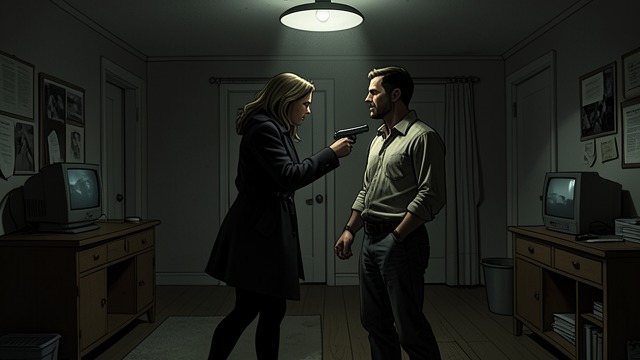
Mei-Ling’s understanding of Huang’s role leads her to his apartment. Huang claims that he kills her only because he cannot let her arrest him. Her death turns a compromised investigation into a personal crime and closes off any possibility that he might confess through lawful channels.
Suicide and Confession
When Li confronts him, Huang admits his part in Cui’s scheme and tells Li that Xinxin may be held at Cui’s Suzhou safe house. He then shoots himself before Li can stop him. His wife has died despite the transplant; his attempt to save her has left him responsible for a larger chain of deaths.
A Legacy of Harm
The Failure of Self-Justification
Consequences Without Repair
Huang’s account makes clear that he did not initially understand the full scale of the murders, but he knowingly issued documents that helped Cui’s clients accept a false account of the organs’ origin. His reluctance to know became part of the scheme’s protection.
Lives Not Saved
The transplant did not save Huang’s wife permanently, and his sacrifice of other people’s lives did not secure the outcome he feared losing. His story shows how a real attachment and a desperate choice can become excuses for continued complicity. Nothing in his final confession restores Mei-Ling or the murdered women.
When Li first joins the Shanghai inquiry
As the surgical murders are confirmed
Three years before the murders are fully exposed
After Mei-Ling confronts him at home
After Huang’s death
